4-Point and Wind Mitigation Inspections: Miami Home Buyers
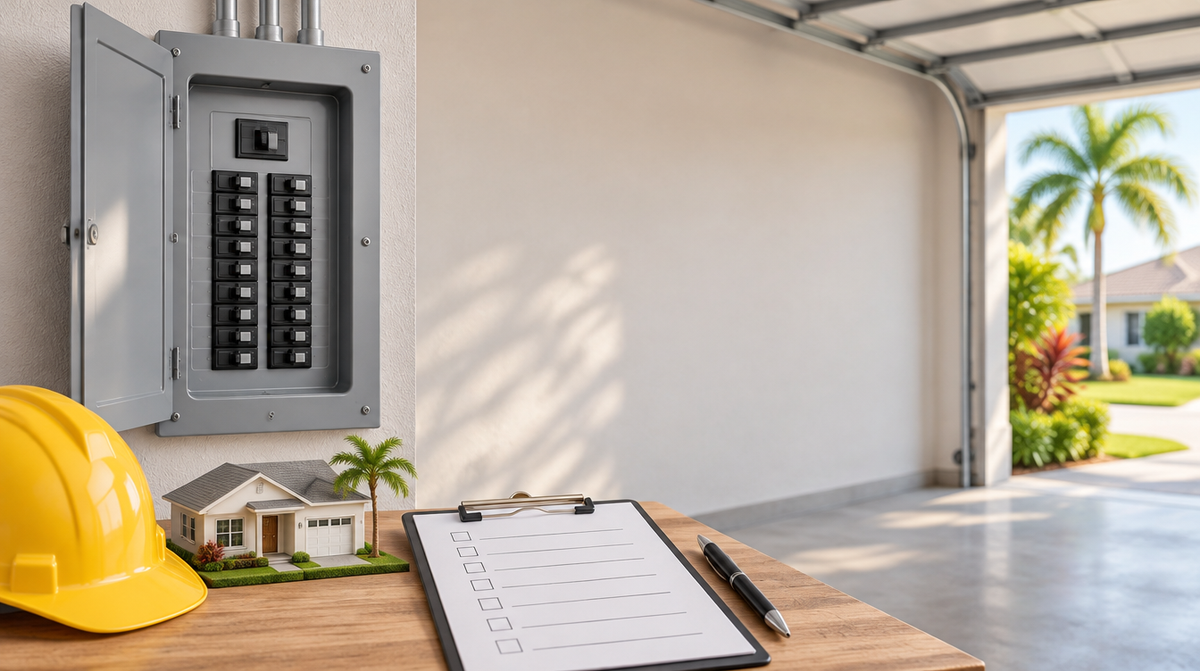
Do you need a 4-point and wind mitigation inspection to buy a home in Miami?
If the home is older than roughly 20 to 30 years, almost certainly yes. A 4-point inspection (roof, electrical, plumbing, HVAC) tells an insurer whether it will write a policy at all, and a wind mitigation inspection tells it which premium credits you qualify for. In Miami-Dade, order both during your inspection period, not after it, because a bad result can cost you the policy, the credits, or your negotiating position. As of early 2026, both typically run about $75 to $200 each.
By Giovanni Altamiranda | November 4, 2026
Most buyers in Coral Gables, Pinecrest, Palmetto Bay, and South Miami know to hire a general home inspector. Far fewer know that the general inspection and the insurance inspections are different documents answering different questions. The general inspector tells you what the house is. The insurance inspections tell a carrier whether it will cover the house, and for how much.
Mixing those up is how buyers end up with a signed contract, a ticking deposit, and a "we can't offer you a policy" email in week three.
What each inspection actually does
The 4-point inspection looks at four systems: the roof, the electrical system, the plumbing, and the HVAC. The inspector records age, material, and condition. It does not predict your premium. It decides eligibility, meaning whether a carrier will bind coverage on that house.
The wind mitigation inspection documents how well the house resists wind. It looks at roof shape, roof-to-wall connections, roof deck attachment, secondary water resistance, and opening protection such as impact windows and shutters. Florida insurers use the results, typically reported on the state's uniform mitigation verification form (commonly referred to as OIR-B1-1802), to apply premium credits.
Think of it this way: the 4-point asks "can we insure it?" and the wind mit asks "how much should we charge?"
Which homes get asked for a 4-point
There is no single statewide age rule. Carriers set their own underwriting guidelines, and they shift. As of 2026 guides from Florida insurance agencies, the common pattern looks like this:
- Citizens Property Insurance: a 4-point is generally required on new-business homes more than 20 years old, dated within 12 months of the application.
- Many private carriers: the trigger usually sits somewhere between 25 and 30 years.
- Nearly all carriers: a 4-point is expected on homes 40 years or older.
Much of the older single-family stock in Coral Gables, South Miami, Pinecrest, Glenvar Heights, and High Pines crosses those thresholds. Even newer homes get asked for one by some carriers. Your insurance agent will tell you what your carrier wants before you order anything, and that one phone call saves you from paying for a report twice.
What fails, and what it costs to fix
This is where the 4-point earns its fee. Common items carriers flag, with typical 2026 repair ranges from inspection-industry guides:
- Federal Pacific Stab-Lok and Zinsco electrical panels. Most carriers decline or require replacement. Budget roughly $1,500 to $3,000.
- Single-strand aluminum branch wiring, found in some late 1960s to 1970s construction. It requires specific remediation methods.
- Polybutylene plumbing, used from roughly the late 1970s to the mid-1990s. A whole-home repipe commonly runs $4,000 to $10,000 on a typical house, and larger Miami-Dade homes can run higher.
- Roofs near the end of their rated life. Asphalt roofs past about 15 years get flagged routinely. Some carriers accept a remaining-life certification from a roofer. Others require replacement before binding.
- HVAC and water heaters near end of life. These rarely cause an outright decline, but they get documented, and some carriers set age limits.
Roof age deserves its own conversation, and the rules around it are specific enough that it has become one of the most common deal-shaping issues for buyers in this price range. I break it down in my guide to how roof age affects your home insurance in Miami-Dade.
When to order them, and who pays
Order the 4-point and wind mitigation together, and do it early in your inspection period. Bundling usually saves money. As of 2026 guides, a 4-point generally runs $75 to $200, a wind mitigation $75 to $150, and bundles often land around $180 to $220. For comparison, a full general home inspection is commonly quoted at $400 to $700 in general Florida guides, and a larger Miami-Dade home can price above that.
The buyer typically pays, because the buyer needs the reports to bind a policy. In a competitive situation, a seller occasionally covers them as a concession. That's negotiable like anything else.
Here's the sequence I walk my clients through:
- Before you write the offer, ask your insurance agent which carriers write homes of that age and what they require.
- Right after the contract is signed, schedule the general inspection, the 4-point, and the wind mit in the same window.
- Send the reports to your agent immediately and get actual quotes with and without the wind mitigation credits.
- If the 4-point turns up a problem, decide inside your inspection period whether to ask for repairs, a credit, or a price reduction, or whether to cancel.
That last step matters most. Your right to cancel for inspection reasons runs on a contract deadline. Insurance quotes that arrive after that deadline leave you with fewer options. If you want the deposit mechanics, I covered them in detail in the guide to backing out of a Miami home purchase.
What the wind mitigation report is worth
Wind mitigation credits can be meaningful on a $1M to $5M home, where premiums are large to begin with. Some agency guides cite savings of $800 to $2,500 a year, but those are marketing-page figures, not guarantees. What you'll actually save depends on the carrier, the home's features, and the roof. The only reliable way to know is to get quotes both ways. My home insurance cost guide has the broader budget picture.
Also confirm with your carrier how long it will accept a wind mitigation report. Carriers differ, and a seller's old report may or may not be usable for your policy. Ask before you rely on it.
For context on timing: as of September 2026, Miami Realtors reported a countywide single-family median sale price of $692,000, 5.1 months of supply, and 26.2% of single-family sales paid in cash. Inventory is up from a year ago in several segments, which gives financed buyers more room to negotiate repairs, but cash buyers still move fast. Either way, skipping the insurance inspections to look more attractive is a bad trade. You'd be taking on the risk the seller was carrying.
Frequently Asked Questions
Is a 4-point inspection the same as a general home inspection?
No. A general inspection evaluates the whole house for your benefit as a buyer. A 4-point looks only at the roof, electrical, plumbing, and HVAC, and it's written for the insurance company. Many buyers order both.
How old does a Miami house have to be to need a 4-point inspection?
It depends on the carrier. Citizens generally asks for one on new-business homes older than 20 years, many private carriers start at 25 to 30 years, and nearly all expect one at 40 or more. Ask your insurance agent before ordering.
How long is a 4-point inspection good for?
Most carriers want it dated within 12 months of the application. If your closing slips or you shop carriers later, you may need an updated report.
Can a failed 4-point kill my purchase?
It can, if you can't get coverage and your lender requires it. That's why the inspection should happen inside your inspection period. A failed item can also become negotiating leverage for repairs or a credit.
Do cash buyers still need these inspections?
If you're paying cash, no lender requires insurance, but you'll still want coverage, and carriers will still ask for the reports. Skipping them just moves the surprise to after closing.
The bottom line
The 4-point decides whether you can insure the house, and the wind mitigation report decides what that coverage costs. Order both early, run quotes before your inspection period ends, and use the results to negotiate. That's the difference between an insurance surprise after closing and an informed decision before it.
If you're thinking through this for your own situation, I'm happy to walk you through it. No pitch, just a straight conversation. Schedule a free consultation at moveupmiami.com.
About Giovanni Altamiranda
Giovanni Altamiranda is a Miami-native real estate advisor at LUXE Properties, a team that closes over $1 billion in annual sales volume, and a licensed loan officer with Columbus Capital. With 11 years of experience and designations including SRS, ABR, and RENE, Gio specializes in Coral Gables, Coconut Grove, Pinecrest, South Miami, Palmetto Bay, Key Biscayne, and the surrounding Miami-Dade neighborhoods. He works exclusively with move-up buyers and relocating families in the $1M–$5M range, and is recognized as a top agent on Zillow. Rather than pushing a transaction, Gio's approach is advisory, helping buyers and families work through the real tradeoffs so they can make the decision that's right for them, not just right now. Born and raised in Miami, he brings firsthand knowledge of the neighborhoods, commutes, and market dynamics that out-of-town agents can't replicate. His dual license as both advisor and loan officer means clients get a cleaner, faster transaction with no surprises at the closing table.
Giovanni Altamiranda, NMLS# LO52044, Licensed Mortgage Loan Officer, Columbus Capital. This is not a commitment to lend. Loans are subject to borrower and property qualifications. Rates and program guidelines subject to change without notice.
This content is for informational purposes only and does not constitute legal or financial advice. Consult a licensed professional for guidance specific to your situation.